Category: Open Access Blogs
-

African scientists get their own open-access publishing platform
by
The African Academy of Sciences will launch next year AAS Open Research, an open access publishing platform, meant to exclusively serve researchers in the continent. The platform is based on F1000Research model. It will adopt post publication open peer-review process. This approach will remove time lag researchers face to publish their research output. AAS Open…
-
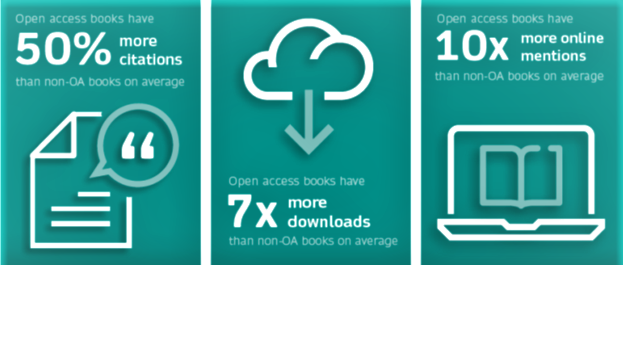
Open Access Academic Books are More Downloaded and Cited
by
A research conducted by Springer Nature reveals that publishing academic books on open access platforms have many benefits. This report, according to Springer Nature, is the first of its kind to make a comparative analysis of open access and non-open access academic books. The study highlights the benefits open access books has provided to authors,…
-

Researches in developing countries are more vulnerable to predatory journals
by
Researchers are constantly under pressure from their faculty to publish articles. This enormous pressure forces researchers to publish their research output as frequently as possible. However, most of the time it is not easy to publish articles on high impact factor journals; rejection is pretty common. For instance, nature rejects 93% of articles it receives…
-
Open Access Week 2017
by
Over the past several days, we have been celebrating International Open Access Week. Ten years after its introduction in the United States, Open Access Week is now celebrated worldwide. Its goal is to increase open access awareness and bring the role open access plays in science and society to the public. It is a scholarly…
-
German researchers resign from Elsevier journals in push for nationwide open access
by
Five German scientists decided to quit Elsevier. They decided to resign from their editorial positions in protest of Elsevier’s open access policy. The reason behind these scientists’ decision is Elsevier’s refusal to accept a new open access payment model offered by the German libraries, universities and research institutes. German based Projekt DEAL, a consortium of leading…
-
Springer Nature pioneers charitable incentive system for peer reviewers
by
Peer reviewers are enabling people in developing countries to access safe drinking water as the result of a collaboration between Springer’s journal Environmental Earth Sciences and the non-profit humanitarian organization “Filter of Hope”. Since the start of the initiative at the beginning of 2017, almost 600 water filters have been distributed in Liberia, Nicaragua, Haiti, Honduras, Russia,…
-

German universities plan to operate without subscribing to Elsevier’s Journals
by
German universities have coped “easily” when cut off from Elsevier journals and do not need to rely on pirate article-sharing sites such as Sci-Hub, according to a negotiator from Germany’s biggest network of research centres. Martin Köhler, who has helped to lead negotiations between the Dutch publishing giant and the Helmholtz Association, gave Times Higher Education details…
-
Study shows that Open Access On the Rise
by
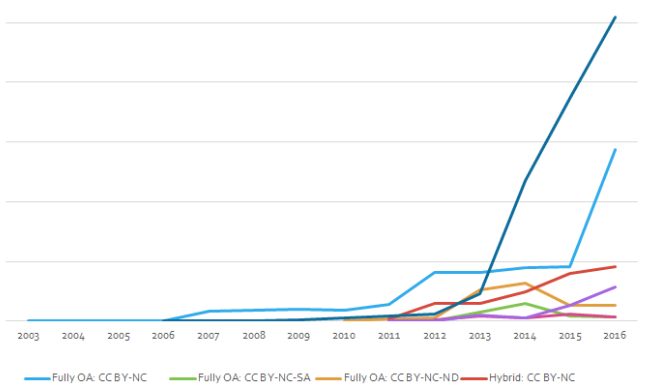
Open-access papers are more popular in the scholarly literature than they’ve ever been, and this trend shows no signs of abating, according to a study of hundreds of thousands of papers published in journals spanning disciplines from physics and astronomy to chemistry and social science. The sprawling study, published this week (August 2) in PeerJ, found…
-
The benefits of open data for the Global South
by
The modern era is marked by growing faith in the power of data. “Big data”, “open data”, and “evidence-based decision-making” have become buzzwords, touted as solutions to the world’s most complex and persistent problems, from corruption and famine to the refugee crisis. While perhaps most pronounced in higher income countries, this trend is now emerging globally. In Africa, Latin America, Asia and…
-

Open Access Data Analysis Points Toward New Drug Discovery Method
by
A research team led by scientists at UC San Francisco has developed a computational method to systematically probe massive amounts of open-access data to discover new ways to use drugs, including some that have already been approved for other uses. The method enables scientists to bypass the usual experiments in biological specimens and to instead…
-

European Open Science Cloud: building a research data e-infrastructure
by
European research and institutional repositories are very much fragmented. The fragmentation has led to inefficiencies which might have impeded the speed of research and innovation. To address this issue, the European Commission has been working to realize a massive e-infrastructure- European Open Science Cloud (EOSC). The EOSC will combine various data infrastructures to provide fast and seamless access to data. The EOSC will be a…
-

The cost of open access to Germany research and educational intuitions
by
There are two avenues for publishing open access articles: The Gold and Green open access. Access to open access journals is free of charge. Nonetheless, there is always cost associated with publishing or disseminating open access articles. There is no publication cost for Green open access articles- they are uploaded in institutional repositories without undergoing…
-
Open Access and the challenge of monitoring policy compliance
by
Many countries and research funding agencies adopted open access policies to research. All open access policies mandate open and immediate access to published scientific articles- in some instances with a maximum of one year embargo period. Furthermore, it is mandatory to provide machine-readable metadata of articles. Though the requirements differ from one funding agency to…
-
Unpaywall Plug-In: Open Access advocates’ new approach to bring paywall down
by
Impactstory, a nonprofit organization working to advance open access, has unveiled Unpaywall a browser plug-in that gives users easy access to electronic open access scientific articles. This plugin, according to Futurism, scans more than 90 million open access articles with Digital Object Identifiers (DOIs). Unpaywall’s plug-in is compatible with Chrome and Firefox web browsers. It is funded…
-
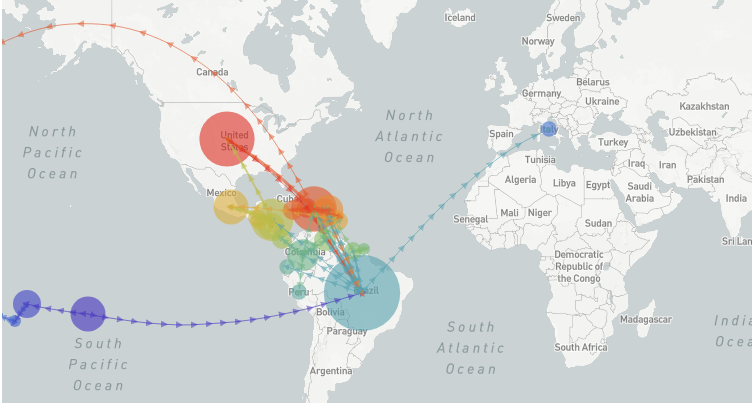
Nextstrain.org wins Open Science Prize
by
Nextstrain.org, a website that enables researchers visualize and track virus evolution in real time, has won Open Science Prize. Nextstrain.org’s model integrates shared and open data from various global research teams to facilitate pathogen surveillance and epidemiological investigations, PLOS reports. Currently, Nextstrain.org is tracking the evolution of Ebola, Zika, Avian Influenza and Influenza viruses. Its…
-
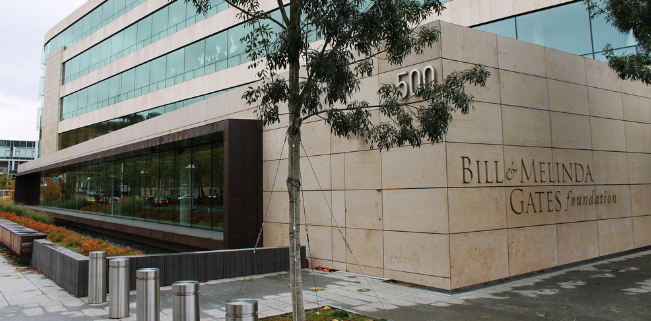
The Gates Foundation came up with an open access publishing platform
by
The Bill & Melinda Gates Foundation launched the Gates Open Access, an open access publishing platform, the Nature report shows. With this platform, the Gates Foundation hopes to accelerate publication of articles and data. The Foundation does not play editorial oversight and it contracted management of publishing services to F1000Research, an organization that is known for quickly publishing open…
-
Berkeley commits to accelerating universal open access, signs the OA2020 Expression of Interest
by
Berkeley | The University Library at UC Berkeley took a major step today in its commitment to achieving universal open access for scholarly journal literature by signing the OA2020 Expression of Interest, in collaboration with UC Davis and UC San Francisco. OA2020 is an international movement, led by the Max Planck Digital Library in Munich,…
-
FP7 post-grant open access pilot project is coming to an end
by
In 2015, the EU FP7 announced a post-grant pilot project to ensure all FP7 funded projects are published in open access, even after the funding program ended. The objective of this pilot project is to encourage researchers to publish their work on open access platforms. To ensure this, the EU makes post-FP7 published articles eligible…
-

Big Foundations Keep Making Strides for Open Access Research
by
Tate Williams | The debate over open access publication of research is one we’ve followed with quite a bit of interest, and not just because philanthropy has planted a few stakes in the issue. As in many fields in recent decades, technology has unlocked all kinds of new opportunities and tensions when it comes to the…
-

European Space Agency announced an Open Access policy
by
Jennie Rose Halperin | Yesterday, the European Space Agency announced an Open Access policy for images and data under a Creative Commons BY-SA license. ESA has made various moves toward making data and images more open in the past, but this announcement is a major milestone for the organization’s commitment to openness. Previously, ESA released individual…
-
Science journals permit open-access publishing for Gates Foundation scholars
by
Nature | If research funders demand open-access publishing, will subscription journals acquiesce? An announcement today by the publisher of Science suggests they will — as long as that funder is as influential as the Bill & Melinda Gates Foundation. The global health charity, based in Seattle, Washington, has partnered with the American Association for the Advancement of…
-

Academic.edu is facing mounting pressure from scholars
by
Academia.edu is facing mounting pressure from academics and open access advocates. It has been challenged because of its dubious business model: many believe that its model is mainly driven by profit-making motive. Problem comes with how Academia.edu is trying to generate revenue. Furthermore, Academia.edu’s business practices lack transparency. Therefore, ‘it is time to deleteAcademia.edu account,’ says Sarah…
-
Gates Foundation funded research face challenges to publish on top-tier journals
by
Researchers funded by the Gates Foundation are facing difficulties publishing on some top-tier journals. This is due to open access (OA) policy that the Gates Foundation and journal publishers follow, according to the Nature’s writer Richard Van Noorden. The Gates Foundation in 2014 put open access policy that mandates immediate open access publishing. It also…
-
German Research Institutes to Boycott Elsevier
by
About 60 major German research institutions have mounted coordinated pressure on Elsevier –the giant scientific journals’ publisher. These institutions are putting pressure on Elsevier to renegotiate better terms of contract with Elsevier before the current contract runs out at the end of 2016. So far, the two sides failed to agree on contract that satisfies…
-

Open and Post Peer Review: New Trends in Open Access Publications
by
The quality of scientific publications will benefit from a revolution in the peer review models. The peer review system was created in the 20th century as a means to ensure the quality and integrity of scientific research. Until recently, peer review mostly took place before articles have been published, relying on ‘single blind’ and ‘double…